Wednesday, 30 January 2013

'The Black Count'- by Tom Reiss. A tale of the black half-slave hero of the French Revolution


Tom Reiss, an American writer best known for his international bestseller 'The Orientalist: In Search of a Man Caught Between East and West', has succeeded yet again in producing this squash-buckling tale of a man so brave, so strong, and filled with such Revolutionary heroics, that he was immortalised in some of the best loved French novels of all time. I am talking of course of General Alexandre Dumas, the real life inspiration behind his son's novels 'The Three Musketeer’s and 'The Conte of Monte Christo'. Dumas' story is so incredible and so unbelievable that it is hard, at times, to believe it is non-fiction, and that the events that shaped his life really took place.

Alex Dumas's real name was Thomas-Alexandre Davy de la Pailleterie; he was born in a slave colony in Saint Domingue, to a slave mother and a French aristocratic father. Alex’s father, who was for all intents and purposes a total scoundrel, sold Alex's mother and their three other children in order to pay for his own passage back to France. Incidentally, he also sold Alex in this way but arranged for his travel to join him once he had raised the funds, and successfully bought his son back out of slavery. This was in 1776. Slavery was illegal in the forward thinking France of this time, so Alex's colour was no issue in his being educated, or in his decision to join the army.

What was surprising was that Alex chose to shrug off his noble background, which could have secured him a commission and a place in the army as an officer. Instead he enlisted as a common soldier in the Queen's Dragoons. As well as his social position he also shunned his father's name, adopting 'Dumas', which was the surname of his mother, whom he would never see or hear from again.


This is actually Alex Dumas the writer dressed up as his beloved father, but you get the idea of the strength and power of the heroic Revolutionary. Oil portrait by Olivier Pichat.
No one could have been prepared for Alex's meteoric rise through the ranks of the French army, something that could only be facilitated by the social and political upheaval thundering through France at the time. Having joined the army at 23, Alex would become General in Chief of the Army of the Alps by his 31st birthday; in command of some 53,000 troops. From the Alps Alex went to Italy, and then joined Napoleon’s ill-fated expedition to conquer Egypt in 1798.
 

In Egypt, Alex would soon realise he had a much more dangerous enemy than the Bedouin rebels in the unforgiving landscape of the desert. Napoleon himself quickly took a dislike to the handsome and tall, powerfully built and strong leader. It was easy to see why Napoleon felt threatened, when he stood at just over five foot, and Alex was well over six. The Egyptian campaign was an unmitigated disaster, with huge losses for the French and little ground won. Napoleon soon fled the hell-hole of his failures in Egypt and headed back to France in 1801 to take control of the rapidly deteriorating situation in Paris. Alex managed to arrange passage on a boat which proved to be unsound, and was forced to dock at Naples, which was at this time unforgivingly anti-French. Alex was captured, thrown in a dungeon, and left there to rot for the best part of three years before his release could be arranged.

Finally returning to France in 1803, after many suffering and trials in lands far away from home, Alex was able to settle down with his adored wife Marie-Louise. They had a son, also called Alexandre, who would become one of France’s most beloved novelists. Alexandre hero worshipped his father, who would become the main inspiration for the characters and events in his stories.
Hulton Archive/Getty Images

Reiss tells a marvellous tale, with never seen before research that he uncovered by blowing up a safe in Villers-CotterĂȘts, France. Having heard an interview with him on Radio 4, and learning the tale of such a fantastically rich life, I knew I had to know Alex’s exceptional story. My only, very minor, complaint about this book is the lack of images included. I suppose this is a typical grievance for any Art Historian. Granted, images of Alex are few and far between. Reiss does however mention in a special chapter at the end of the book an old statue of the General in Paris. Sculpted by Alfred de Moncel, it showed Alex standing proud, like a ‘resolute patriot, grasping his long rifle like a walking stick’. Before the statue was destroyed by the Nazis in the winter of 1941-2 (I suppose it is easy to see why the Nazi’s would not want a statue of a strong and heroic black man standing proud) a few photographs were taken, and I would simply have loved to have seen one. Hell, I would have even liked to have seen the blown up safe!

Please do read this book if you love history and adventure. Many thanks to my sister for buying me the book for Christmas.

 'The Black Count- Glory, Revolution, Betrayal and the Count of Monte Cristo' by Tom Reiss was published by Harvill Secker, London, in 2012.


Monday, 3 December 2012

Art Crush: Alexandre Cabanel

Through work I stumbled upon an artist who I had not thought about for years and who I had  briefly studied whilst at school. This artist sums up 19th Century French academic style (the kind of reserved, methodical approach that the French Impressionists believed was repressing artistic and social expression). This was of course Alexandre Cabanel, who epitomised the 'high art' ideals of the Ecole des Beaux-Arts. He had won the Prix de Rome by the tender age of twenty-two and was awarded the Grande Medaille D'Honneur no less than three times. His models were Classical ideals of beauty, aloof and mystical. His most famous and iconic work was 'The Birth of Venus', 1863, which was bought by Emperor Napoleon III.
'The Birth of Venus' 1863
Although this portrait is unbelievably 'fake' and rather ridiculously sentimental, I cant help but love it. Its so other worldy, and so sumptuously painted that the Venus's body looks like icing on a cake.
'The Daughter of Jephthah' 1879
Again with the mystical beauty. Reminds me of the Pre-Raphaelite approach to their female subjects, remote, removed and never in the same realm as the spectator.
'Echo' 1887
In this work it is amazing to see how the figure's flesh can be seen through the iridescent cloth covering her body. Despite her strong pose, it makes her appear vulnerable, especially as she seems to cower against the rock.  Here are a few more:
'Phedre' 1880
'The Masked Beauty'
I could go on, I think I may be obsessed...

Tuesday, 6 November 2012

Discover a little taste of the Orient in sleepy Kensington

Leighton House is a fascinating time capsule, transporting you back to the time of the Pre-Raphaelite movement, and even further afield to the lands of the Orient. The former home and studio of Lord Frederic Leighton (1830-1896), this house proved to be Leighton's muse as well his home. He turned the space into the perfect showcase to display his work and the works in his collection to friends and admirers that flocked to see this fascinating building. Over the thirty years that Leighton lived and worked here he transformed the property into his own intensely private devotional space to the aura of ancient and mystical art.
The Arab Hall with exotic rugs and a small fountain in the centre
The most amazing and justifiably famous room at Leighton House is the Arab Hall, which is lined floor to domed ceiling with over a thousand Islamic tiles, most of which Leighton bought back from his travels in Damascus. In this room Leighton would entertain his eclectic range of guests, artists, writers and musicians. I would imagine that they would have to be very careful not to fall into the fountain after craning your neck up at the stunning ceiling tiles after one too many glasses of bubbly.
The view of the ceiling of the Arab Hall, (without having to crane your neck)
Much of Leighton's life remained shrouded in mystery as he was an intensely private man. He never married, although there were rumours of his having an illegitimate child with one of his models. He was the first British artist to receive a peerage, but was also the bearer of the shortest peerage in British history, as he died the day after he was created the First Baron Leighton of Stratton.
One of Leighton's most famous works (unfortunately not in the museum)

Explore the rest of the house and you discover exquisitely decorated rooms filled with beautiful architecture and tiles, with sculptures and paintings everywhere. The museum has also preserved Leighton's impressive studio which boasts massive windows overlooking the garden. Finally if you venture outside there is a fantastic sculpture, which I thoroughly enjoyed:
!!
 I am pretty sure you are not supposed to sit on it, but it was my birthday!

Good article on the Guardian webiste about Leighton House after its £1.6m restoration:
http://www.guardian.co.uk/artanddesign/2009/dec/22/backstairs-secrets-art-lord-leighton
Entry to Leighton house is £5 for an adult, £3 for a concession.
 

Monday, 22 October 2012

Adventures in India...

Apologies for the hiatus in posting, I have recently graduated from UCL, moved, and started my new job as a researcher on a fascinating project.

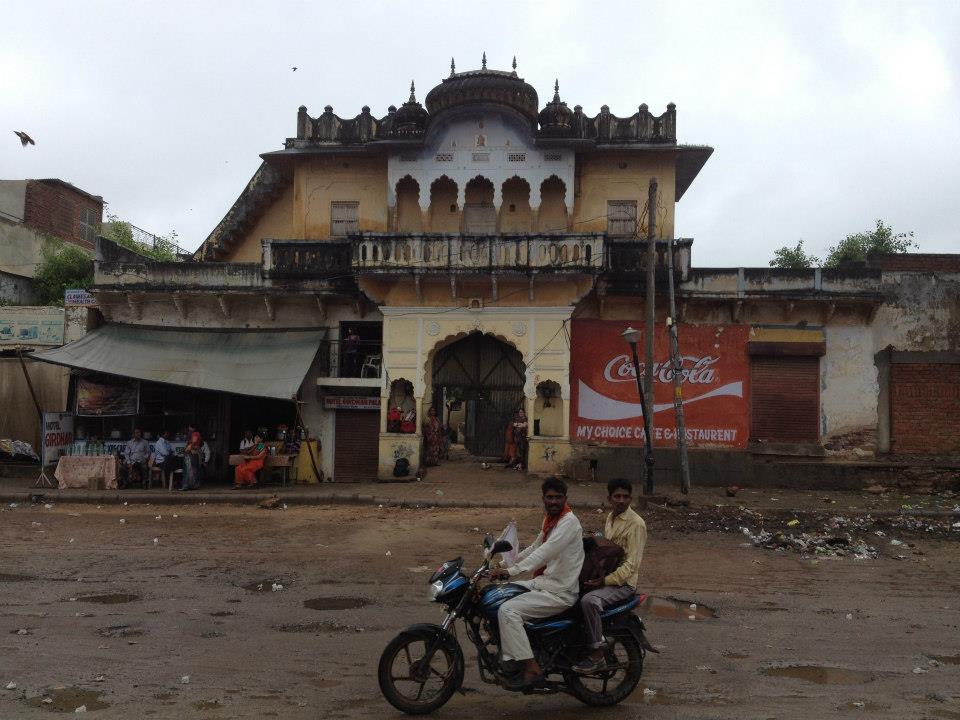
Before all the fun and games of life as a working gal began however, I took a once in a life time trip to India with one of my oldest and closest friends, Amaryllis. We travelled for three weeks all across Northern India, from the Thar desert through Rajasthan to Calcutta in the East. It was the most entrancing holiday I had ever been on. Despite the fact that between the two of us we had done a fair bit of traveling, neither of us had been anywhere like India. It was incredible in both the good and the bad. The sites were saw on a daily basis in terms of architecture and history were often shockingly beautiful. Yet we were also confronted with a world very different from the one we had left back in England, both in terms of poverty but also cultural values. It certainly opened our eyes to an exotic world that definitely could not be unwrapped in a mere three weeks. We really only scratched the surface. I thought I would share some photographs that we took on the trip (as you can imagine there were quite a few!)
The Thar desert
Image courtesy of Aimee Holmes
Camel trekking, Amaryllis on the left and I am in the centre.

May I introduce you to our camels: Alfred and Carol. Our names for them, as you can imagine.
The Mehrangarh Fort, Jodphur. Built in 1459, it is absolutely stunning. This was one of the female only Royal courtyards.
We met some awesome Indian kids. At first they could be shy but after a while they would crack the most insane smiles and were keen to laugh and play with you. These are the children of a local potter who we visited. 
Jain Temple
The interior of the Jain Temple. Like something out of Tomb Raider! It was monsooning outside so you could hear all the reverberations on the roof and rain was pouring down the walls onto the marble floor. 
A lot of the Indians we saw liked to take photos and videos of us on their mobiles. So we started doing it to them! It was an annoyance but actually by joining in it often broke the ice.

These two images are from Pushkar, a very holy city. It rained so hard here we were stranded in the hotel for an evening. This was the night we were introduced to the joy of Bollywood films!
Image courtesy of Amaryllis Earle.
So this is the shot you get up at 5am for! Amaryllis and I at the Taj Mahal. Funnily enough the Taj Mahal has never been something I was ever really over keen to see, but once I saw it that early in the morning, I was totally blown away. As it was monsoon season the sky was so pale it looked like the marble was almost disappearing, or appearing Im not sure...
View of the Ganges, Varanasi. 

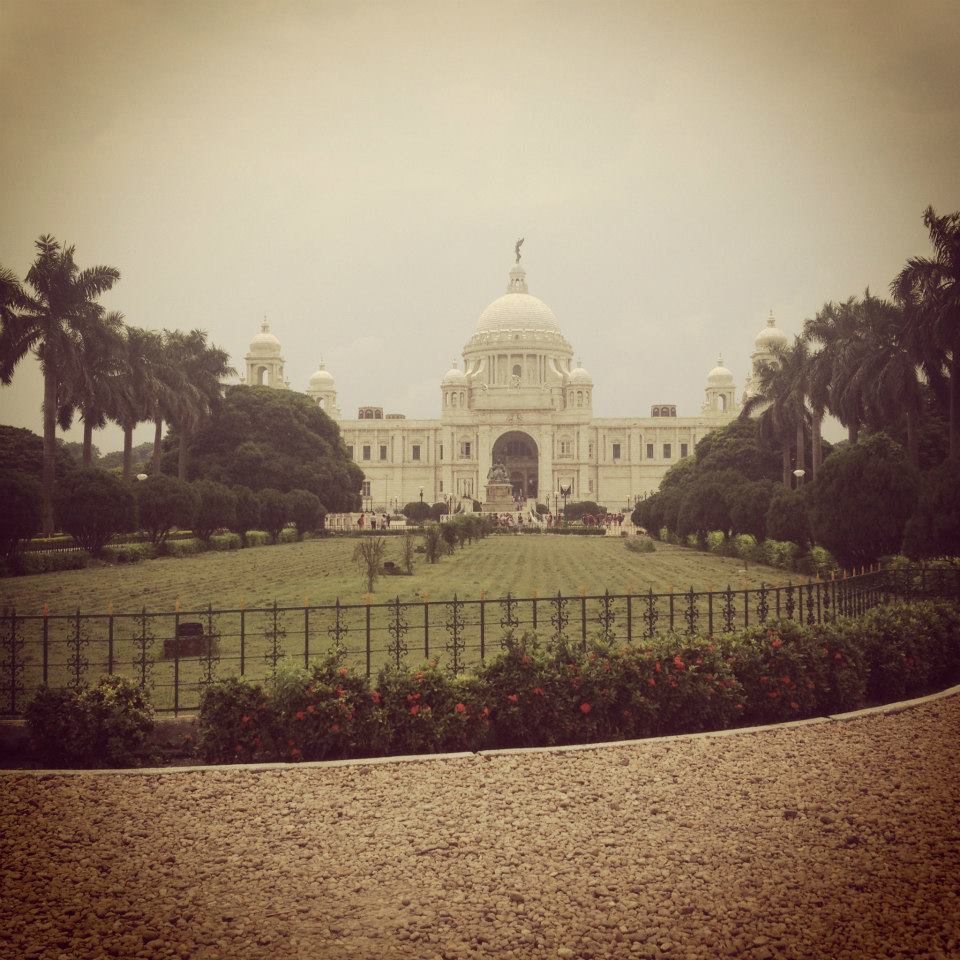
One of the places that first drew me to India was Calcutta. I spent a lot of the last year at university studying British Colonial and Post-Colonial presence in India, so Calcutta was obviously a hot topic for us. For me, Calcutta was one the highlights of the trip. We were lucky enough to go to the South Park Street Cemetery, which was full of Western inspired tomb sculptures. It was so far removed from the urbanised hussle and bussle of the city outside the cemetery walls, with wide boulevards surrounded on either side by giant mausoleums under the dense cover of mango trees. It was such an unusual place, again like the setting for an adventure film.
Unusual mix of European monument style and Jain (see temple images above). There were so many different examples in this amazing place. Such a hidden gem, I would definitely recommend it to anyone who happens to visit Calcutta.
  Victoria Memorial, Calcutta. So beautiful, but also such a beacon for British presence in India. I was surprised that it is essentially a massive empty space, literally just designed for grand ceremonial occasions that only a hand full of people would get to attend. It reminded me that British rule in India was so much more about the show of power rather than actual authority and governance on the ground. 

Amaryllis also has her own (rather more professional and exciting) blog which promotes positive beauty both inside and out! She has some fabulous posts from interior decorations to do it yourself hairstyles so I thoroughly recommend you check it out! The site is called www.deeperdazzle.com
The post on India Unplugged by Intrepid Travel, which is what our trip was called, is linked here:
http://deeperdazzle.com/2012/09/

Sunday, 8 July 2012

A few snaps from a recent visit to the Natural History Museum

Currently I am interning at Christie's and so get to spend my lunch breaks having a quick mooch around the V&A and the Natural History Museum. There are worse places in which to eat your packed lunch! These two photos are just two from a selection that I took on my phone, particularly love the two kids getting their photo taken by the saber tooth cat!
Whale skeleton paws
Saber-tooth cat


Sunday, 1 July 2012

Art for the Masses-The Public Catalogue Foundation


With the advent and rapid development of the internet, information has suddenly become available at the click of a button, or a touch of a screen. We can access information at home, work or on the move. We can comment, criticise and ‘like’ ideas and images that circulate at a rapid pace. The unprecedented control that the public body has gained over its own direction and presentation has proved somewhat of a problem for major institutions, who traditionally held the reins of power in regards to how ideas and particularly images were disseminated into the public domain. Copyright laws, so tightly entangled in ideas of ownership and restrictions, now seem incongruent with the modern world in which everything you would ever need to know is obtainable via the internet.

Exciting steps are being made however, with institutions moving towards making their catalogues more accessible to the public. This is in keeping with the general move away from the institution as an elitist organisation. The museum and art gallery are now required to make themselves portals of information open to all. They must provide a public service that is accountable to the taxpayers needs. The Public Catalogue Foundation, working alongside the BBC and its ‘Your Paintings’ initiative hopes to create a comprehensive online catalogue of the 200,000 paintings that are in what are considered to be ‘public institutions’. These refer to museums, government offices, public libraries and council buildings. Due to a lack of space, as many as four out of five paintings in public institutions are not on display to the public, and many will have never been photographed before this ambitious project. Since the site launched earlier this year, it has already uploaded an impressive 145,000 oil paintings, and so is over half way to its target. It aims to have another 21,000 uploaded in the next few months.

 ‘Your Paintings’ is a classic example of how the twenty first century can engage the public with its artistic heritage. By using media that most people today are more than familiar with, it seeks to make art and history relate to the public, and even make it ‘trendy’. On the site you can ‘tag’ paintings, where you are asked to indicate things, names, places, events and subjects that spring to mind when you look at each particular image. In this way the site is asking for the public’s help in organising this colossal archive into some kind of scheme, as with each tag the paintings are classified. Encouraging the viewer to look at these paintings more closely, it also makes the catalogue inherently interactive, more of a dialogue between the public and the institution. You can also tweet about the site, post it on Facebook, send paintings to your friends. You can even develop your own ‘My Paintings’ page where you can add and delete paintings to your own private collection.

The Public Foundation Catalogue has inspired a myriad of other organisations to attempt the publicisation of entire catalogues online. The Getty Research Portal is just one of many, as well as the Poissin Conoisseurship Project run by Dr. David Packwood. In the future, it is not inconceivable that all art works in all countries could be assessed via various forms of online media. This would of course include the wider circulation of many lesser-known works, and the increased publicisation of less visited art galleries and museums. This project also marks the advent of institutions working together in a collaborative effort to provide an arts service to the public domain.

At the earliest, the ‘Your Paintings’ site should be finished by late 2012. The completion of this project could mark a juncture where access to image information is no longer restricted to the academic elite. No longer will you need a back stage, VIP pass to gain access to the full extent of the artistic pedigree held in public institutions. Comprehensive and even exhaustive scholarship will now be possible. With this project, the nations’ oil paintings really do become ‘Your Paintings’.

Link to the 'Your Paintings' site http://www.bbc.co.uk/arts/yourpaintings/